
Everyday health · 27 November 2026
Wedding season food: enjoy the feast without feeling heavy
For anyone with a stack of wedding and party invitations between now and February.
Quick read
The whole note in about a minute.
- The idea: You can enjoy wedding food and still feel light, if you settle a few small habits before you leave home.
- The plate: ICMR-NIN's plate is about half vegetables, fruits and greens, so start with salad and sabzi.
- Sweet and fried: ICMR-NIN advises adults to keep sugar to 20 to 25 g a day and cut down on deep-fried food.
- Water, sleep, walk: Aim for about 8 glasses of water across the day, 6 to 8 hours of sleep, and a 10-minute walk after dinner.
- When to see a doctor: If you take regular medicines or have diabetes, ask your doctor how to handle long event days.
Where do I start when the buffet opens?
Start with the vegetables. The ICMR-NIN Dietary Guidelines for Indians 2024 draw a "My Plate for the Day". Vegetables, fruits, green leafy vegetables, tubers and roots make up essentially half of it. A wedding buffet isn't your daily plate, but the picture is a handy guide when you're holding an empty one.
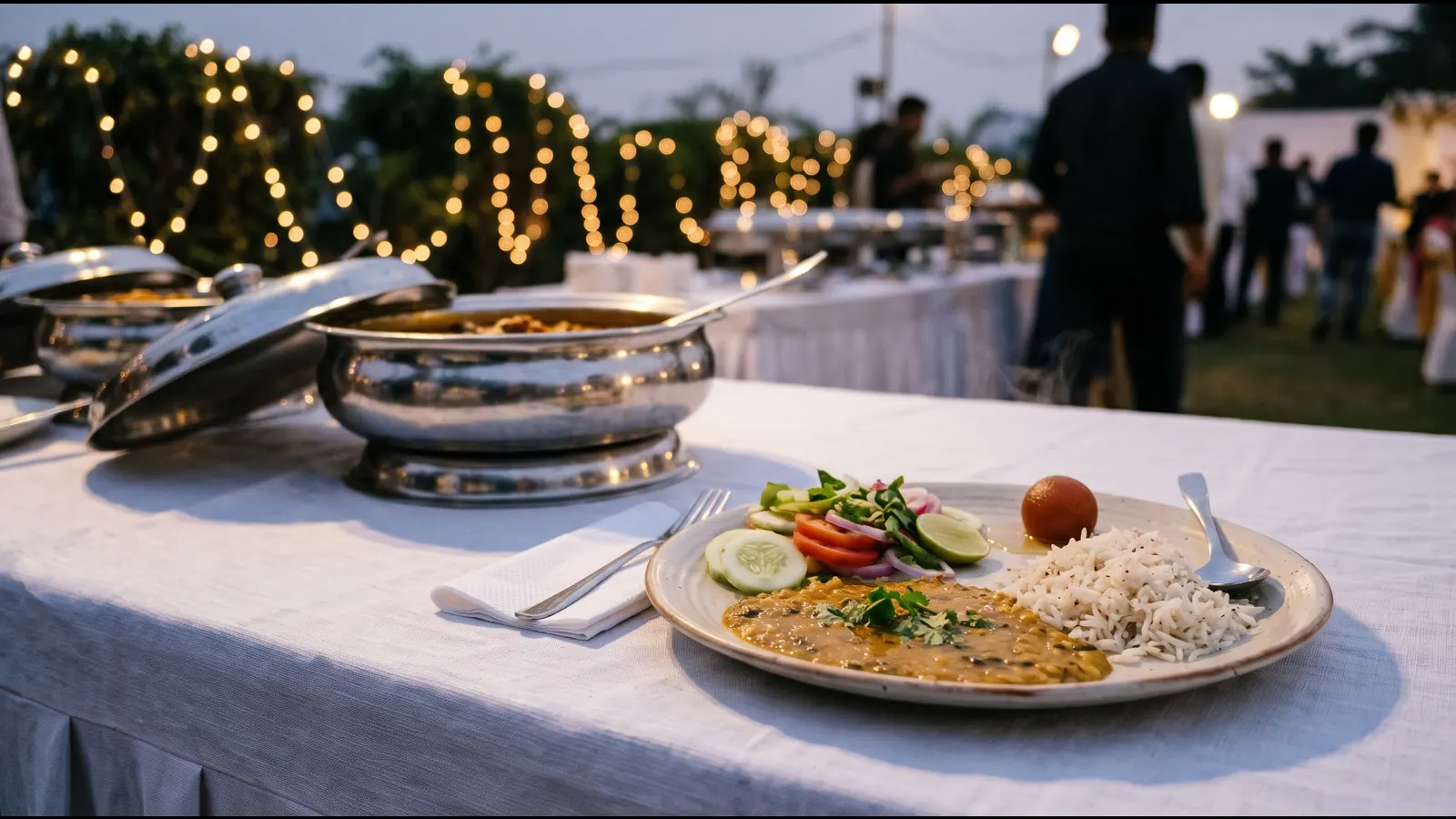
Fill about half with salad and sabzi before you reach the live counters. Then add a roti or a little rice, and one or two richer dishes.
Portion size does much of the work. The same guidelines say to be mindful of portion sizes and prevent overeating. A small first plate that you can finish beats a full one you push through.
Starters and chaat counters make it easy to eat all evening. ICMR-NIN's first guideline mentions two to three meals a day and no snacking in between. Count the starters as part of your dinner, not a warm-up to it.
How much mithai and fried food is reasonable?
Sugar is the easier one to count. ICMR-NIN suggests adults keep sugar to 20 to 25 g a day. Its guidelines count a teaspoon as 5 g, so that's about 4 to 5 teaspoons. The guidelines also say to avoid foods and beverages with added sugars, so sweet drinks count along with dessert.
Pick the sweet you'd really miss and take a small portion. Skip the ones you'd barely notice.
Salt is the quiet third. ICMR-NIN says intake should not be more than 5 g of salt a day, about one level teaspoon. Pickles, chips and salty snacks all add to it.
Fried food gets the same treatment. ICMR-NIN advises cutting down on deep-fried foods, and to choose carefully when eating food prepared outside the home. You can't see the wedding kitchen, so one or two fried items you love is a fair rule, rather than every tray that passes.
What about water and drinks?
Between greetings, photos and queues, water is easy to forget. ICMR-NIN says a healthy person needs about 8 glasses, roughly 2 litres, of water including beverages each day. Carry a bottle, or take a glass of water with each course.
If the welcome drink is fresh fruit juice, ICMR-NIN says adults can have it occasionally. The juice should come from no more than 100 to 150 g of whole fruit. A glass of plain water between courses is the easy swap.
On alcohol, the guidance is short. ICMR-NIN's section on staying at a healthy weight says to avoid soft drinks and alcohol.
What helps when the night runs late?
If the dinner starts late and the drive home is long, sleep is the first thing to go. ICMR-NIN puts a healthy sleep pattern at 6 to 8 hours a day. It says this helps you avoid unhealthy eating and the weight gain that follows.
A short walk after dinner is an easy habit to add. CDC suggests starting with a 10-minute walk after dinner and building up slowly. It also suggests walking with your family. At a wedding, that can be a lap of the venue lawn or the stroll back to the car.
What you can do
- Start with a small plate and fill about half of it with salad and sabzi.
- Choose one sweet and one fried dish you really want, in small portions.
- Carry water. About 8 glasses across the day is the ICMR-NIN guide.
- Walk for 10 minutes after dinner, ideally with family.
- On event nights, protect 6 to 8 hours of sleep where you can.
What if I take regular medicines or have diabetes?
Ask your doctor before the season starts. They know your medicines, your readings and your usual routine, so they can tell you how to handle meal timing on a long event day.
Don't change a tablet or an insulin dose on your own for a wedding.
How do I settle back in between events?
In Mumbai's wedding season, one week can bring a mehendi, a sangeet and a reception. That is why ordinary days matter.
ICMR-NIN's guideline on fruits and vegetables says every individual should consume at least 400 g of vegetables and 100 g of fresh fruit every day. On the days between functions, a simple home meal with dal, sabzi and a fruit gets you most of the way there.
Keep the walk going, keep your sleep regular, and the season stays enjoyable instead of exhausting. CDC also suggests a walk during lunch, which suits a working day between functions.
Questions people ask
Do I have to skip dessert completely?
No. ICMR-NIN advises keeping sugar to 20 to 25 g a day, so one small portion of a sweet you like fits better than several.
How much water should I drink on a wedding day?
About 8 glasses, roughly 2 litres, including beverages, is the ICMR-NIN guide for a healthy adult across the whole day.
Is a walk after dinner enough after a heavy meal?
Think of it as a good habit, not a trade. CDC suggests a 10-minute walk after dinner, built up slowly over time.
I have diabetes. How do I handle a wedding?
That's a question for your doctor, who knows your medicines and readings. Ask before the event, not after it.
Pick the one dish you came for, give it a proper small portion, and enjoy it slowly.
Neulife Labs is a neighbourhood pathology lab in Jogeshwari West, with home sample collection in nearby areas.
Related: Sitting all day: how to move more without finding extra time · A fasting blood test before office: how to plan the morning
Sources: Dietary Guidelines for Indians 2024, ICMR-National Institute of Nutrition; Get Active, Centers for Disease Control and Prevention.